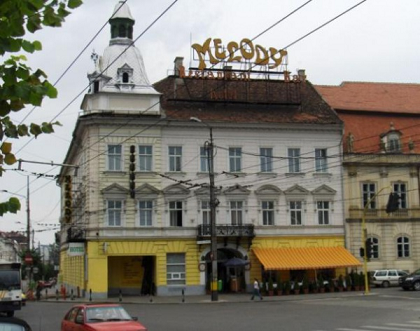
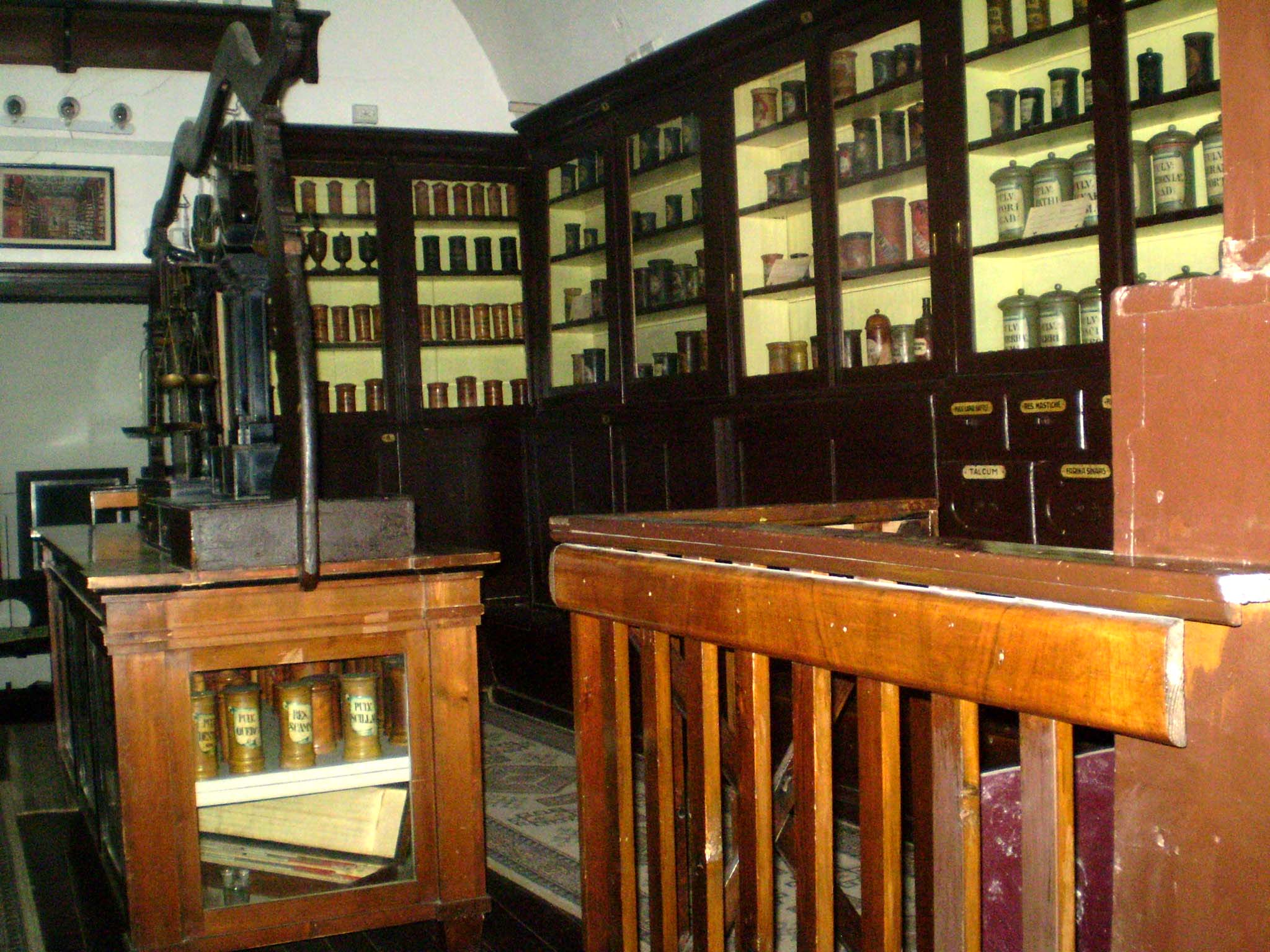
The Pharmacy History Collection can be found in the oldest pharmacy building of Cluj-Napoca, named “La Sfântul Gheorghe”, also known as the Hintz pharmacy, dating back to 1573.
The museum opened in 1954; later, in 1963, the Pharmacy Museum changed its name in The Pharmacy History Collection, under the National History Museum of Transylvania.

The museum started with a collection of Transylvanian pharmaceutical objects, owned by Professor Iuliu Orient (1869-1940). The collection was first exhibited in 1904 in one of the exhibition rooms at the Transylvanian Museum (Muzeul Ardelean/Erdélyi Múzeum). This collection containing 1,800 pieces was donated to the museum and it was enriched over time through other several valuable donations that describe the pharmaceutical activity in Transylvania from the 16th century to the 20th.
The room in which drugs were sold is decorated with a baroque mural painting dating back to 1766. This decoration is one of a kind in Romania.

The original furniture is from the 17th century up to the 19th century. Old pharmaceutical recipients, pharmaceutical products, old books and important documents can be found here. The substance room contains over 200 wooden pharmaceutical recipients from the 17th-19th centuries. The pharmacists used this type of recipients to preserve powder from medicinal herbs and some mineral powder. There is also a wooden mobile pharmacy with many labeled medicine bottles contained in its drawers.
The pharmacy’s basement looks like a medieval chemistry laboratory where only the pharmacist and his assistants had access. Tools that were used in the past for the preparations of healing potions are displayed here, amongst with glass retorts, copper distillers, drip device (an installation for extracting tinctures), recipients and bowls made out of bronze and copper, pharmaceutical containers and tin measurement tools, wooden mixers, antique glass, ceramic and wooden recipients, bronze and cast iron jars.

Interesting facts:
•On one of the cabinet’s doors there is a graphic representation of man’s life cycle: childhood, youth, adulthood, and death;
•Esculap’s two serpents surrounding the tree of life;
• A map of every certified pharmaceutical company in Transylvania from the end of the 15th century to the beginning of the 18th century can be found in the main lobby;
•Pulvis mumiae vere (mummy powder) and gemstone powder, both of universal use;
•Hyraceum: animal product (African badger) with multiple medical use: epilepsy, hysteria;
•Venetian theriac used as antidote against poisoning;
•Syrian asphalt used for treating rheumatic diseases;
•Coral powder and lobster eyes – natural calcium sources.

Entry fee: 5 RON; students and senior citizens: 3 RON
Photo fee: 25 RON
Schedule
Monday, Tuesday, Wednesday, Friday from 10.00 to 16.00 Thursday from 12.00 to 18.00 Saturday, Sunday closed
Telefon: + 40 (0)264 – 597.567
Email: crisanradu47@yahoo.fr
Web: http://www.mnit.ro
Text preluat de pe visitclujnapoca.ro