The beginnings of the Eparchial Museum date from 1924, under the leadership of Bishop Nicolae Ivan, but some halls of the second floor of the Episcopal residence are open to the public only in 1938. In 1975 the museum was rearranged and opened to the public at the second floor of the Orthodox Archiepiscopal Residence of Cluj. The Patrimony of the museum has continuously been enriched with a great number of icons, old prints, documents and sacred objects. Nowadays it represents one of the most important ancient art collections in Romania.

The great scholar and theologian, Metropolitan Bartolomeu initiated the arrangement of the permanent exhibition of the Metropolitan Museum in the basement of the Cathedral.
The Metropolitan Museum of Cluj was reorganized during 2011, according to a modern scientific museographic concept under the supervision of Prof. Marius Porumb, member of Romania Academy. As a result has become an institution that gathers priceless values of the national history and aspects of religious life of the Romanians from Transylvania. The cultural artistic patrimony consists of old icons painted on wood and icons on glass, sacred objects, manuscripts and ancient Romanian book collection, objects and documents related to the history of the Eparchy of Cluj.
The patrimony of the museum consists of a great number of icons painted on wood and glass, sacred objects, chalices, liturgical manuscripts during the period between the 15th and 19th century and prints during the period between the 17th and 19th century, originating from various typographical Romanian centers, that reveals a continuous circulation of book collections on both sides of The Carpathian Mountains, ensuring the national cohesion of language all over the Romanian territory.

Under the great influence of Stephen the Great, a monastery founder and protector of the Orthodox Hierarchs of Vad and Feleac, the first hall of the museum is dedicated to the personalities of the Great Hierarchs of Orthodox Eparchy of Cluj: Bishop Nicolae Ivan (1921-1936), founder of the Cathedral, Bishop Nicolae Colan (1936-1957), a defender of the Orthodox faith in hard times who lately became Metropolitan of Ardeal, the bright Archbishop Teofil Herineanu (1957-1992) who rose above his contemporaries through his great spiritual qualities and Bartolomeu, Archbishop and Metropolitan of Cluj (1993-2001), great hierarch, interpreter of the Bible, founder of the Metropolitan of Cluj, scholar and writer, playwriter and poet. In the very proximity of the first hall is situated the necropolis of the hierarchs, built in the shape of a chapel, under the apse of the Cathedral’s altar, which houses the tombs of Bishop Nicoale Ivan, Archbishop Teofil Herineanu and Metropolitan Bartolomeu.
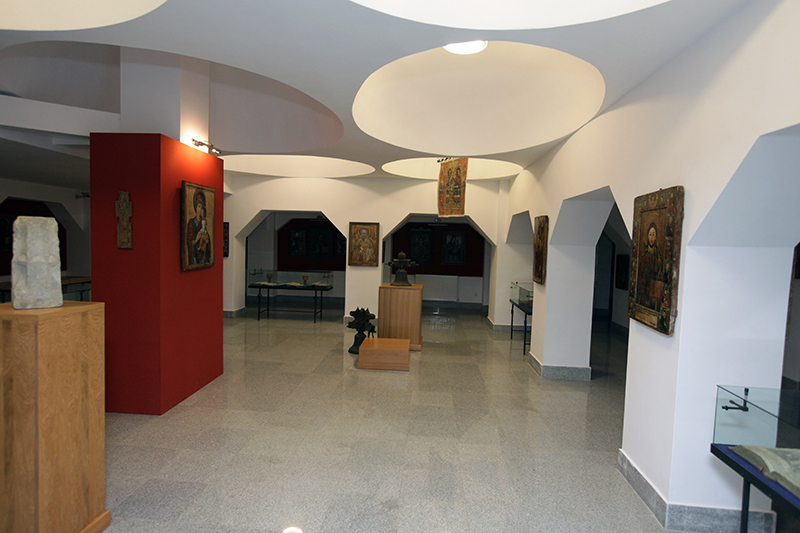
The large space underneath the Cathedral’s narthex includes a hall surrounded by many halls and hallways. This structure is designed to convey an impression of a mysterious atmosphere of piety, recalling the clerical universe, the Paleochristian catacombs or the underground churches.

The main hall underneath the narthex houses a large number of original relics and photographic reproductions evoking religious historical files about the old Diocese of Vad. Some famous relics are related to the Archdiocese and Metropolitan of Feleac. The exhibition in the main hall also includes liturgical manuscripts dating from the 15th and the 16th century, prints from the 17th and 18th century, precious fragments of mural paintings from the 15th century originated in Răchitova church (county of Hunedoara) and founded by the Princes of Muşineşti; admirable icons from the 16th century painted by the artists of Moldavian school of painting.
The icon of Virgin Mary and her Son holds a place of honour in the museum and originates in the church of Ilişua village. It was painted in 1673 by Luca from Iclod, who also the author of the famous miraculous icon from Nicula Monastery. Two halls are dedicated to a large number of icons painted on glass which illustrate various stages of the oldest glass painting center from the Monastery Nicula and the village situated in the proximity to the monastery. Icons of a great value, belong to the museum, forming one of the richest iconographic collections in Romania.

The Orthodox Cathedral, an exceptional work of the Romanian Interwar period, along with the Metropolitan Museum of Cluj are cultural and religious objectives of great importance for the visitors of Cluj-Napoca. This museum is a treasure of Romanian art and history, worth visiting and admiring by the local citizens, students from Cluj-Napoca, Romanian and foreign tourists.
Info:
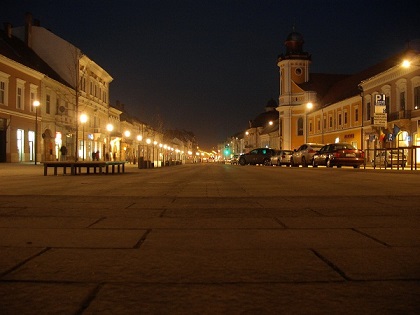
The Metropolitan Museum of Cluj is located in Avram Iancu Square, in the basement of The Orthodox Metropolitan Cathedral
Open: 10-17 Tuesday to Saturday; 12-17 Sunday; Closed on Mondays.
Entrance for adults: 5 lei,
Entrance for young and students: 2 lei.
Text preluat de pe visitclujnapoca.ro