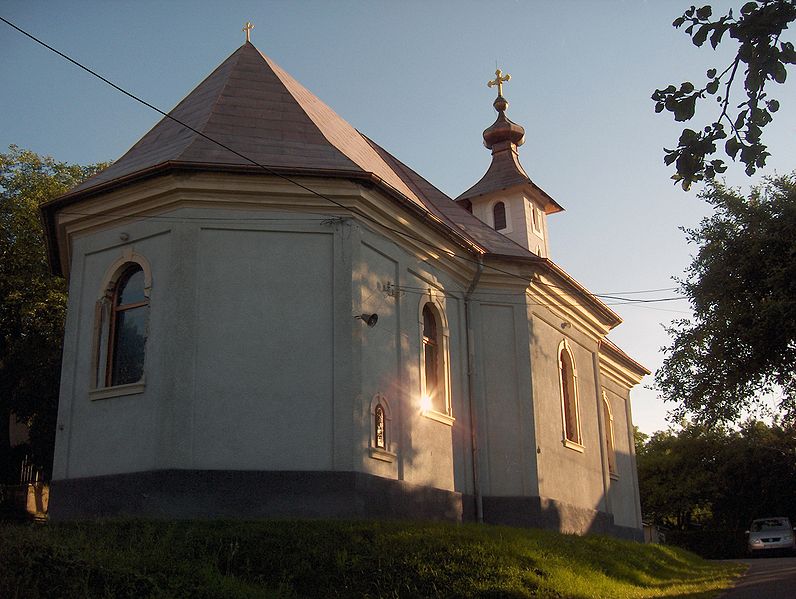
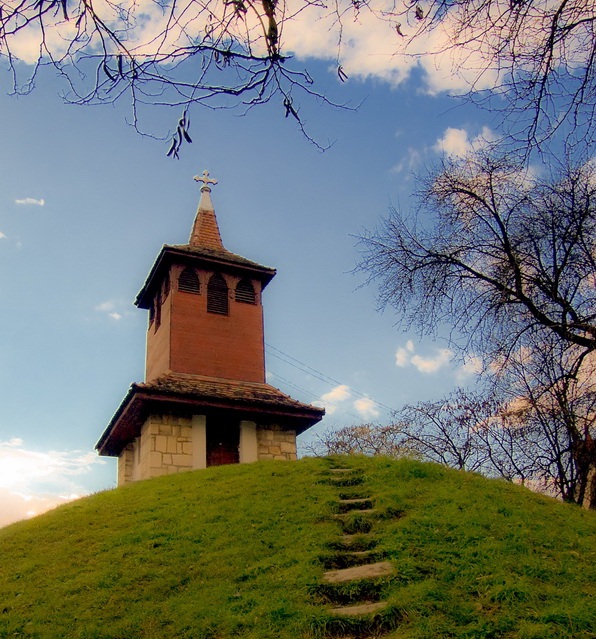
The first fortification in Cluj-Mănăştur (60, Mănăştur Street), consisting of ground palisade and defense ditch, dates from the 10th century. In the 11th century a Benedictine convent was to be found here, that was destroyed by the Tatar invasion in 1241.

The current church building belonged to the Abbacy of Monasterium Beatae Mariae Virginis of Clus-Monostra. Patron is the Assumption of the Virgin Mary; the building kept important documents in time.
In 1437, the Convention of Cluj-Mănăştur sealed understandings between the gentry and the peasants uprising in Bobâlna. Anthony the Great, the peasants’ rebel chieftain, was executed here.

The church was partially destroyed by a hit (in the 16th century), then, by the Tatar invasion in the middle of the 17th century. Only in the 19th century, the church’s nave, the arches and choir walls were rebuilt by Roman Catholics.
In the communist period, the church was given to the Romanian Orthodox religion, and during 1991 – 1994 was used jointly by the Romanian Orthodox Church and by the Roman Catholic Church. After 1994, the building has returned to the Catholics and entered a broader process of restoration.
Text preluat de pe visitclujnapoca.ro