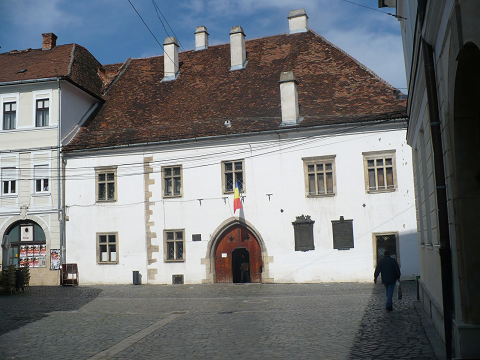
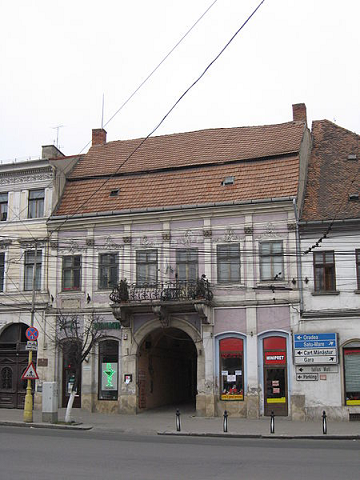
The Filstich house was one of the most opulent and wanted buildings in the town before the baroque palaces were built in the central square. The house was built in the 16th and 17th century by the Filstich family, a goldsmiths’ fellowship family.
The history of this building starts with Peter Filstich Jr. who got from Geberal George Basta the right to work the gold.

The building accommodated many councilors and imperial officers but also Transylvanian aristocrats. In 1608, Dionisie Banffy lived here on his marriage occasion with the sister of Prince Gabriel Bathory – Ana Bathory who later was accused of witchcraft and the fact that she was her brother’s mistress. It is said that she was into black magic and that she used to take baths in young virgin’s blood to maintain her beauty. Her fame was put behind only by her cousin Elisabeth Bathory.
The wealth of the Filstich family aroused people’s envy. It is why the family emblem, kept in the inner courtyard of the house, represents a unicorn and a quotation saying “Virtutis comes invidia”, meaning “virtue is accompanied by envy”.

In the 18th century the building was bought by the nobles from the Kemeny family who adapted the house to the century’s new conform requirements.
Today’s façade of the building dates from the late baroque times, and it shows representations of the four seasons and Saint Florian surrounded by burning houses. It is said that this building was spared in one of the fires that devastated the town of Cluj.
The rooms from the underground and ground floor are arched and structured in 3 parallel sections. The underground lies under the wings surrounding the first inner yard and under the inner yard itself, the majority of the rooms have brick cylindrical arches. The walls of the underground were built from river stones with parts of building stone blocks.
Text preluat de pe visitclujnapoca.ro.